


Treatment of alcohol dependence is possible not only with medication and psychotherapeutic methods.There are many popular recipes that help a person overcome addiction.The basis of most of these remedies are herbs.
But, despite the apparent harmlessness of plant materials, if used incorrectly, they can cause harm.Therefore, it is necessary to know exactly which herbs help combat alcoholism and how to use them correctly.
Rules for herbal medicine
When planning to use any herb against alcoholism, you need to remember some rules:
- Herbal treatment should be preceded by cleansing the body of toxins and waste;
- it is necessary to strictly follow all the dosages indicated in the recipe, as the effect of some plants is very strong, while others are generally poisonous;
- It is not recommended to replace decoctions and infusions with alcohol tinctures, this will not increase the effectiveness of the product and may cause a breakdown in the alcoholic (in addition, some herbs are absolutely incompatible with alcohol);
- before starting treatment with herbal remedies, you need to make sure that the patient does not have an allergic reaction;
- At the slightest sign of poisoning or general deterioration in health, herbal treatment should be stopped immediately.

Herbs for alcoholism
There are some herbs that can help you get rid of drunkenness.The action of most of them is based on the fact that, in combination with alcohol, they cause dizziness, nausea and vomiting.A serious condition that occurs repeatedly after drinking alcohol causes the self-preservation instinct to be triggered.An alcoholic is afraid to drink, hoping he will feel bad again.
In addition, a reflex is formed - a person sees a direct connection between drinking alcohol and painful symptoms and, on this basis, gradually develops an aversion to alcohol.
Centaur
Folk remedies for alcoholism based on centaur are very popular.They were used to alleviate cravings for alcohol long before the advent of drugs.For treatment, the plant can be prepared independently or as part of a tea.Centaury eliminates cravings for alcohol, cleanses the body of toxins and normalizes the functioning of internal organs.
To prepare the decoction you will need 2 tbsp.spoons of fresh or dried centaury.They are poured with 250 ml of boiling water, boiled over low heat for 10-15 minutes, then left for 2 hours.Before use, the broth must be strained.Take a third of a glass three times a day.The course of treatment is two weeks.
Puppeteer (Hemeritsa)
Puppeteer's tincture is most often used to treat alcoholism in secret from the patient.The herb is very poisonous and, in combination with alcohol, causes severe symptoms of intoxication - a decrease in blood pressure, vomiting.This is explained by the fact that the alkaloids present in the plant cause disturbances in the functioning of the cardiovascular and digestive systems.
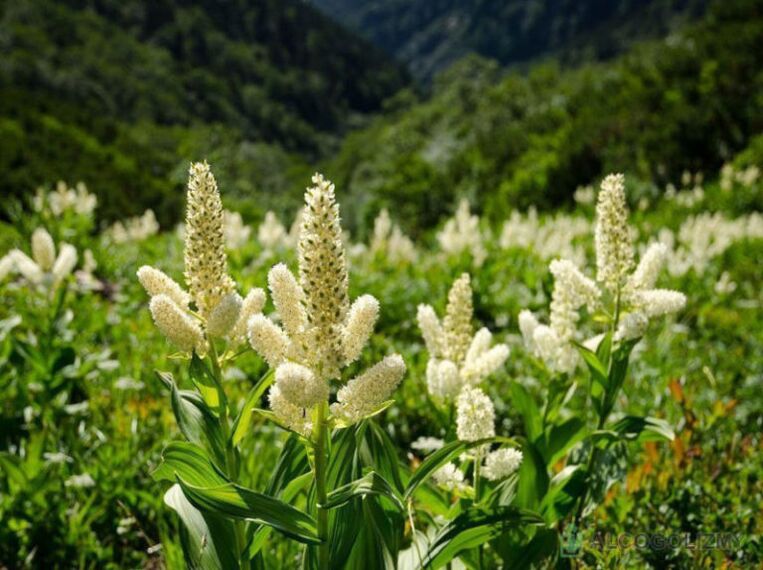
To prepare the tincture, 20 g of raw materials (you can use the herb itself or the root) are poured into 400 ml of vodka and infused for 10 days in a dark place.After that, you need to carefully strain the liquid.Instructions for use: 5 drops of tincture are added to an alcoholic's drink or food.Treatment continues until a persistent aversion to alcohol develops.
Important!Using puppeteer to get rid of alcoholism is associated with the risk of various complications, from severe poisoning to stroke, as the herb has many side effects.You should not use it without consulting your doctor.
bay leaf
Bay leaf is another effective remedy for drunkenness.The tincture is prepared from 2-3 large leaves and 200 ml of high-quality vodka.The liquid is infused in the dark for 12 to 15 days, after which it is filtered.The patient receives one third of the resulting infusion once a day.After 3 days, a positive effect is already noticeable - the person develops an aversion to alcohol.
Kopyten
European grass is deservedly considered a very effective remedy for alcoholism.After taking the medicine while drinking alcohol, the patient will feel unwell, experience severe nausea and possible vomiting attacks.To prepare a medicine for alcoholism, most often not the herb is used, but the coffin root.
Fissure tincture is prepared as follows: pour 15 g of crushed rhizome into a glass of heated water, bring to a boil and immediately remove from heat.After half an hour, strain.Drink 20 ml of decoction once a day.It is believed that hoofed grass also gives good results in the treatment of alcoholism in secret from the patient.
Thyme (thyme)
Thyme (or creeping thyme) is another common remedy used for alcoholism.The combination of thyme and alcohol causes abdominal pain and vomiting, causing the patient to quickly develop an aversion to alcohol.Also, unpleasant symptoms appear when using a thyme-based product, even with a small amount of alcohol.
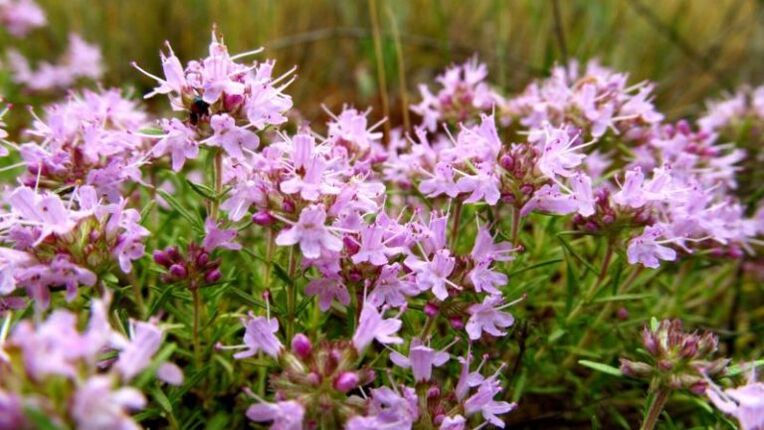
There are several options for preparing a thyme decoction for alcoholism.
One of the recipes is: 3 tbsp.spoons of raw materials are placed in a glass of boiling water and left for an hour.The filtered liquid must be drunk three times a day, 1 tablespoon.to harvest.The course of treatment is 2 weeks.If necessary, the course can be repeated after a week break.
Another recipe for thyme decoction for alcoholism is as follows: 3 tbsp.spoons of dry raw materials are placed in 0.5 liters of water and placed on fire.After the liquid boils, cook over low heat for about 30 minutes.Then leave for an hour in a cool place.After filtering the broth, warm water is added to a volume of 0.5 liters.The product is added to an alcoholic drink.For 0.5 liters of strong alcohol, 3 tablespoons are enough.spoons
Treatment of alcoholism with thyme gives the best effect in the initial stages of the disease, when the addiction is not yet so strong.
Important!When preparing a decoction of thyme, you need to remember that the combination of this herb with alcohol gives a strong negative reaction, therefore, in search of a quick result, you should not exceed the dosage.
Love
Lovage is a herbaceous perennial plant from the celery family and is often used for alcoholism.Such remedies give quick and quite lasting results due to the fact that, in combination with alcoholic beverages, they cause unpleasant painful symptoms:
- vomiting, nausea;
- diarrhea;
- stomach pain.
Lovage root is used for alcoholism.2 tbsp.spoons of crushed rhizome are placed in 250 ml of boiling water and left for 50-60 minutes.After that, the liquid is filtered and placed in a glass container.Lovage tincture is added directly to alcohol in the amount of 2 tablespoons.spoons per 0.5 liter of drink.Treatment continues until a stable aversion to alcohol is formed.
kudzu root
Unlike many herbal remedies that cause an aversion to alcohol, kudzu root, which came from Asian medicine, works differently.Due to its chemical composition, the plant significantly enhances the effect of alcohol, causing the person to become intoxicated with a much smaller dose.Consequently, less alcohol enters the body, which means toxins are eliminated faster and hangovers are easier.
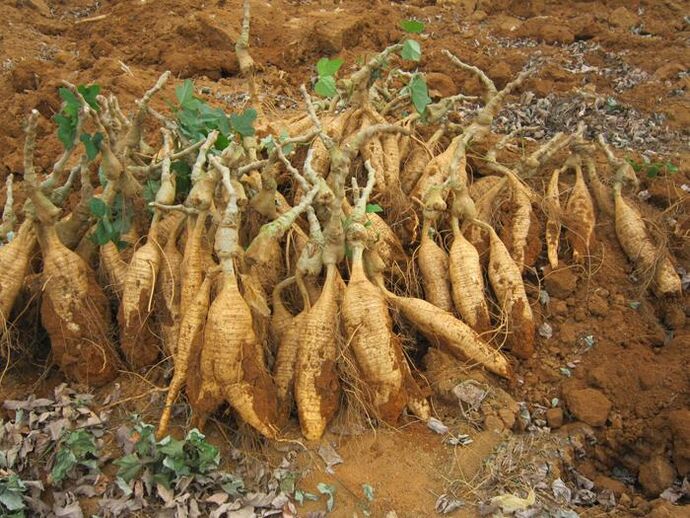
Products based on kudzu root have a cumulative effect and over time, the desire for alcohol decreases and the body begins to recover, thanks to the hepatoprotectors and natural antioxidants contained in the plant.
curly sorrel
A decoction of curly sorrel helps to improve well-being after excessive alcohol consumption and relieve symptoms of intoxication.To prepare the medicine 1 tbsp.A spoonful of crushed plant root is brewed with a glass of boiling water and boiled for 5 to 10 minutes.Then leave for two hours and filter.You need to drink the infusion three times a day, 60-70 ml.
St. John's Wort
St. John's wort contains many natural antidepressants, vitamins and active substances that suppress the desire for alcohol.2 tbsp.spoons of herbs are placed in a glass of boiling water and then heated for half an hour in a water bath.Drink half a glass of the decoction twice a day.The duration of the course, depending on the result, is 2-3 weeks.
Baranets
Baranets is another herbaceous plant that helps fight alcohol addiction.The effect is achieved in 1-2 months.An infusion of the herb in combination with alcohol intake causes profuse and prolonged vomiting.5 g of herb is boiled for 5 minutes in 250 ml of water, then infused for 30 minutes and filtered.Drink 50-70 ml of the product 15-20 minutes before drinking alcohol.In addition, it is advisable not only to drink alcohol, but also to smell it, so that not only the taste, but also the smell of the drink causes disgust.
Absinthe
An infusion of wormwood will help reduce cravings for alcohol.To prepare it, 1 tbsp.pour a spoonful of herbs with a glass of boiling water and leave for 20 minutes.The strained product is divided into three parts, which must be taken half an hour before meals.The course of treatment is 10-12 days.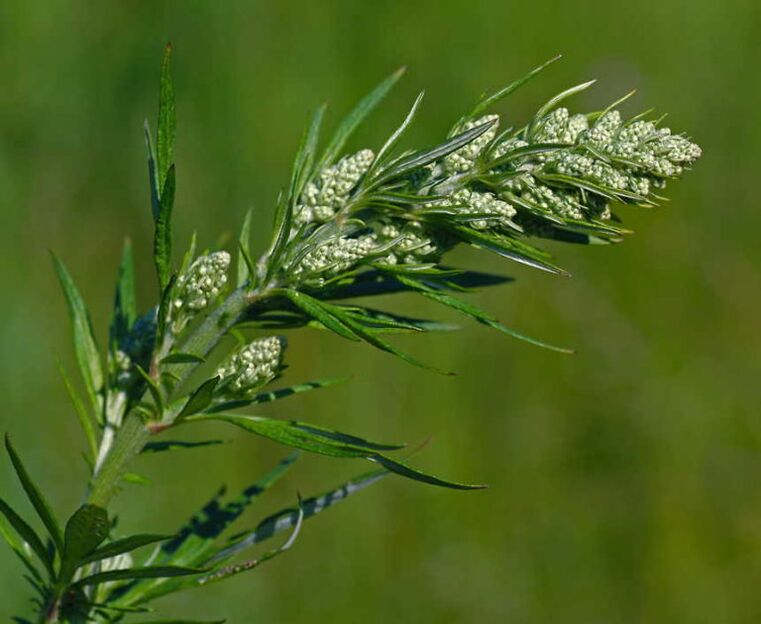 There are many positive reviews about the effectiveness of a decoction of wormwood and thyme.Herbs must be mixed in a ratio of 1:4, 2 tbsp.Pour 0.5 liters of boiling water over spoons of the resulting mixture.Boil for 10 minutes and then leave for an hour.After the broth has cooled, it must be strained.Take 50 ml three times a day.Duration of treatment – 1 month.
Herbs for alcohol poisoning
After drinking a large amount of alcohol or after abandoning a party, it is necessary to alleviate the person's condition and eliminate the symptoms of intoxication.There are several proven traditional medicine recipes for this:
- a decoction of tansy can alleviate almost all unpleasant signs of poisoning;
- lemon balm decoction (1 tablespoon per glass of boiling water) helps to stop prolonged vomiting;
- decoctions of horsetail, linden, thyme, mint (1 tablespoon per glass of boiling water) accelerate the removal of toxic substances from the body.
To cleanse the body as quickly as possible, you can use herbs that induce vomiting, but this should be done with caution.
Herbal infusions
Many herbs work well in herbal remedies for alcoholism.Teas based on plant ingredients not only help eliminate alcohol addiction, but also relieve stress, stabilize the body's functioning and normalize sleep and appetite.
Several popular herbal teas for alcoholism:
- St. John's wort, wormwood, yarrow, thyme, mint, juniper.1 tbsp.pour a spoonful of the herbal mixture into 1 liter of boiling water and leave for 20-25 minutes.The filtered liquid is drunk 3-4 times a day for 15 days.After a week break, the course is repeated.
- Monastic tea for alcoholism is another effective drink for relieving alcohol cravings.1 teaspoon of the collection is brewed with a glass of boiling water, infused for 20 minutes and filtered.The product is taken in accordance with the manufacturer's instructions.
- A coffin root coffee drink is a strong and quite effective remedy, but it should be used infrequently to avoid side effects.
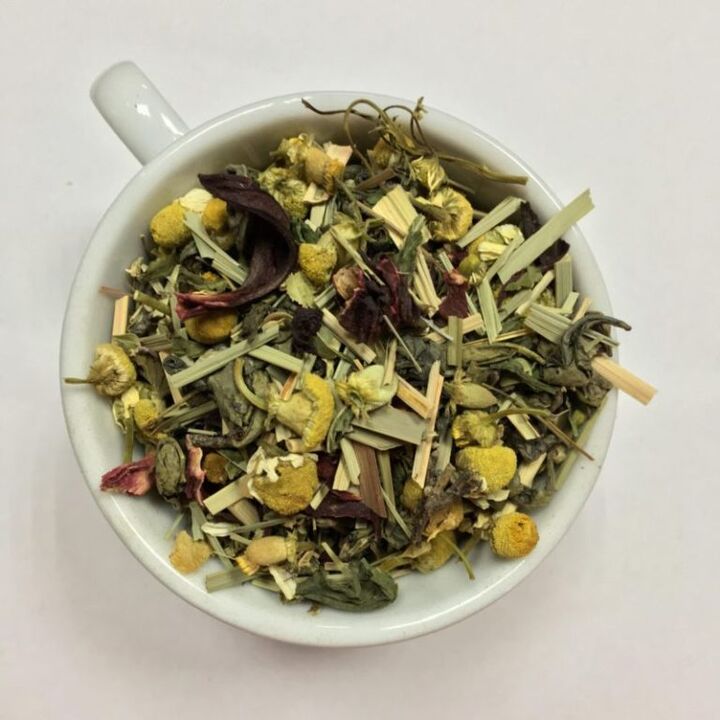
Attention!Herbs for preparing preparations for alcoholism can be purchased at a pharmacy or collected by yourself (but only if you are well versed in botany and are sure that you have found exactly the plant you need).
Contraindications
Attention!Herbs for alcoholism cannot be treated like regular tea.We strongly recommend that you consult a doctor before use.
When using herbal medicines, one must act with caution and remember possible contraindications, the main of which is individual intolerance to any component.Additionally, there are some more restrictions:
- Herbs that cause vomiting should not be used by people diagnosed with stomach diseases (gastritis, ulcers);
- for hypertension, herbal treatment may cause complications;
- Herbal treatment for alcoholism is also contraindicated for people with diabetes.
Conclusion
Some herbs actually help eliminate alcohol cravings.They may not be able to completely cure a person, but as an additional medicine they are very effective.When planning to use folk remedies, you need to make sure that there are no contraindications and strictly follow the recipe and dosage prescribed for use.